There’s a particular kind of magic that settles over Seattle as day gives way to night. You come to Seattle USA for the postcard. You know the one. That impossibly slender, futuristic spire, crowned with a halo-like observation deck, piercing the moody Pacific Northwest sky. The Space Needle is an icon, a promise of panoramic views and 1962 World’s Fair nostalgia.

To watch the sunset from 520 feet up. The line to ascend was a buzz of anticipation, but the moment the elevator doors opened onto the open-air observation deck, every conversation hushed. The 360-degree view does that to you.

But then, something in your peripheral vision stirs.
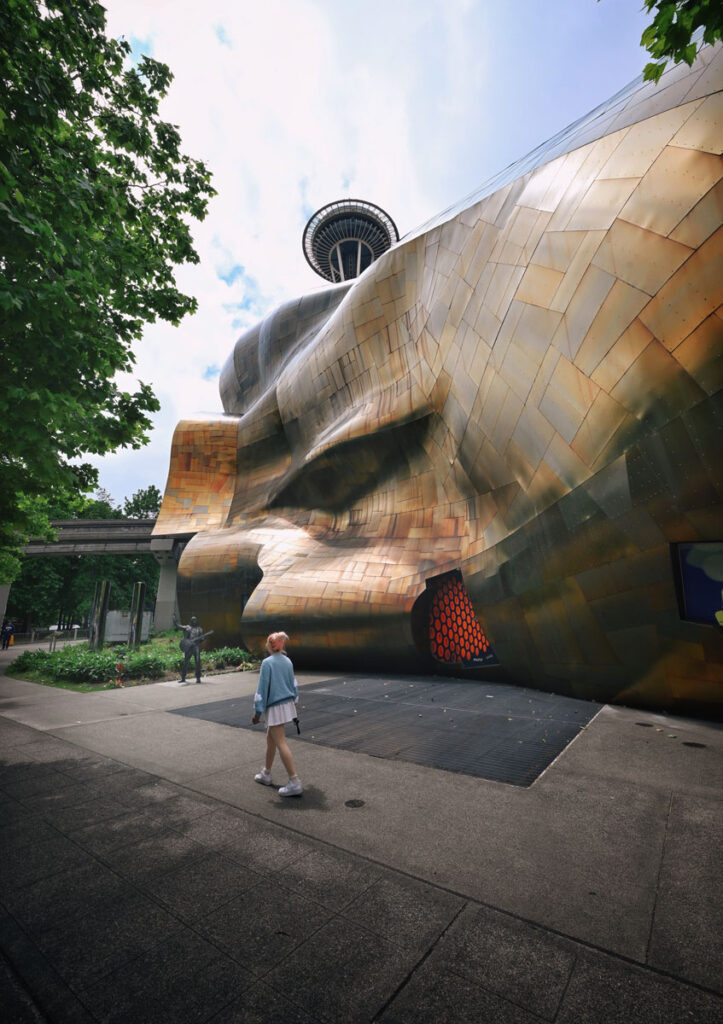
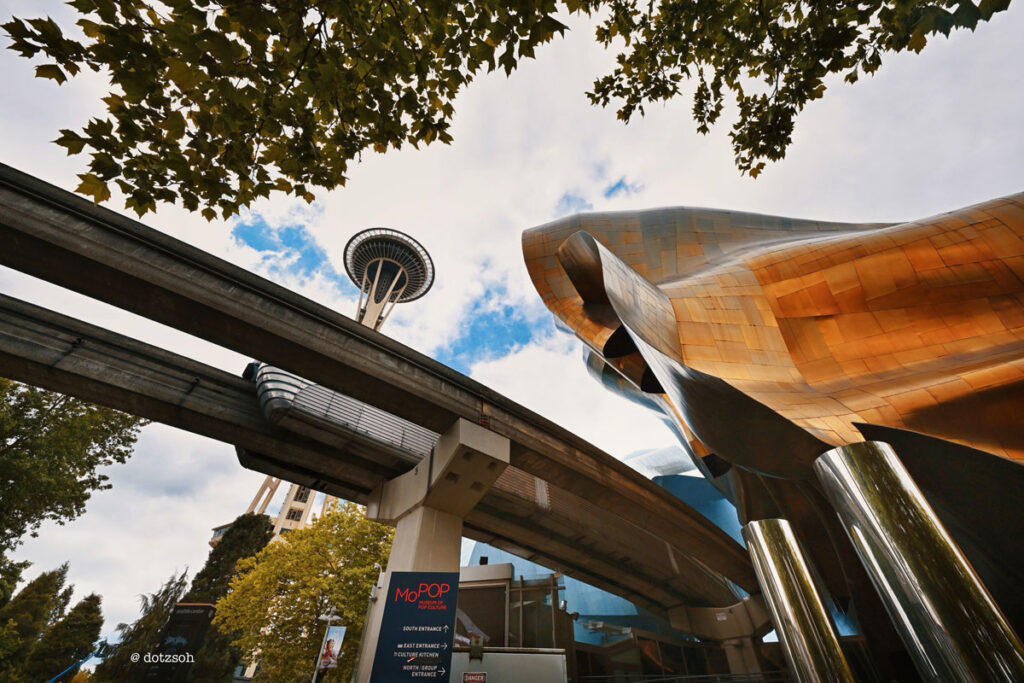
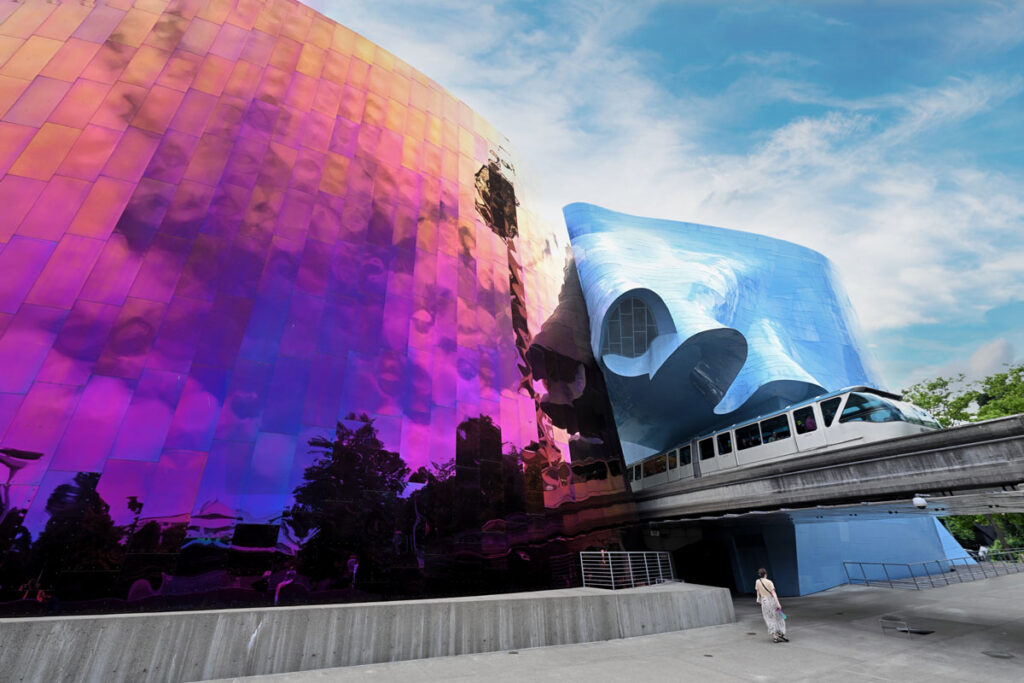
Just beside the Needle, nestled not in its shadow but in a vibrant, conversational partnership, sits a building that looks less built and more unfurled. This is the MO Museum (Museum of Music & Pop Culture, but MO is its true heartbeat), and its architecture is a symphony composed in titanium and glass by the legendary maestro of the unexpected, Frank Gehry.
This is where your Seattle story deepens. This is where the city’s soul isn’t just viewed from 605 feet up, but felt, heard, and experienced at ground level.
The Space Needle is a singular note, held beautifully, perfectly, for decades. It’s a steady, soaring baseline. Frank Gehry’s MO Museum is the explosive, joyous jazz solo that riffs off it.
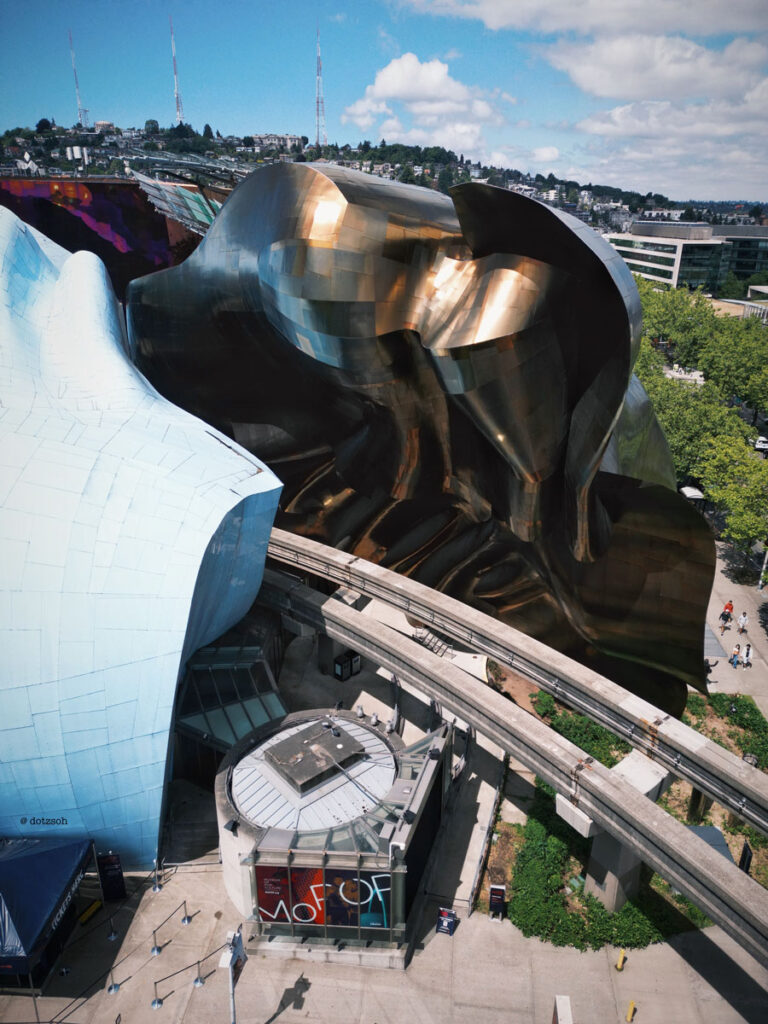
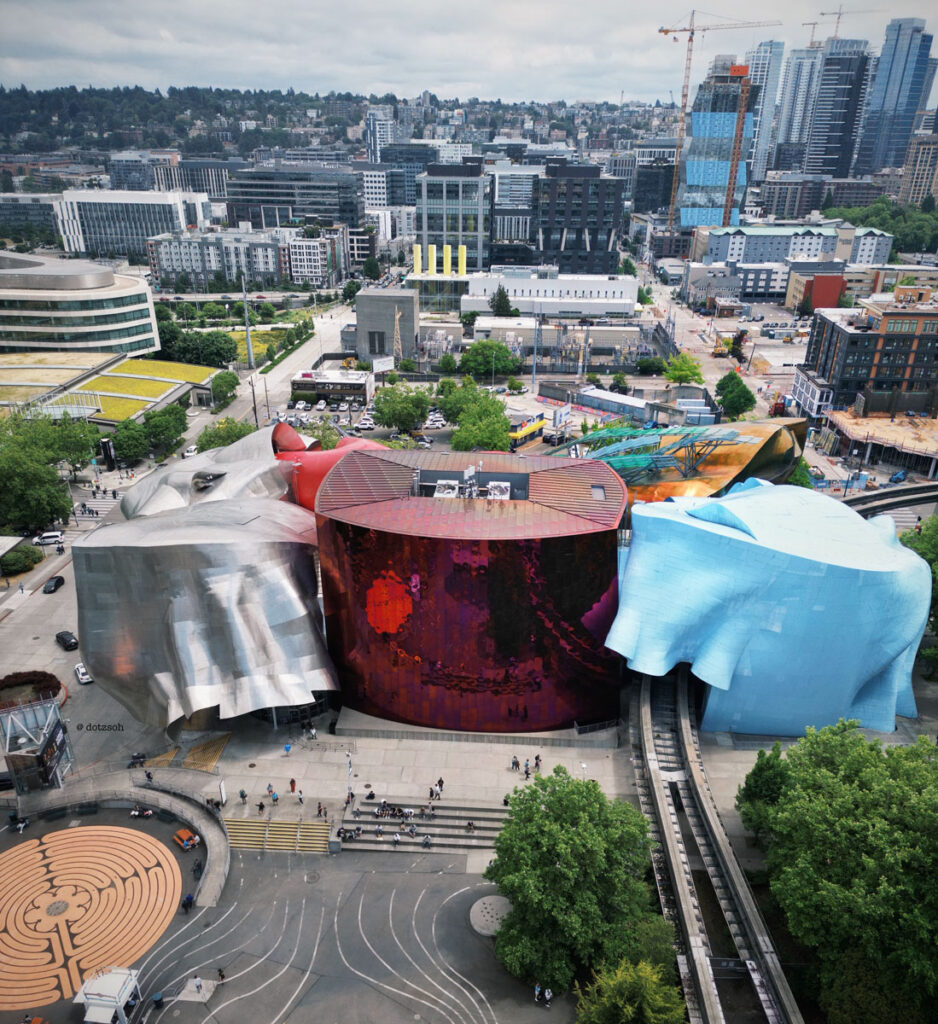
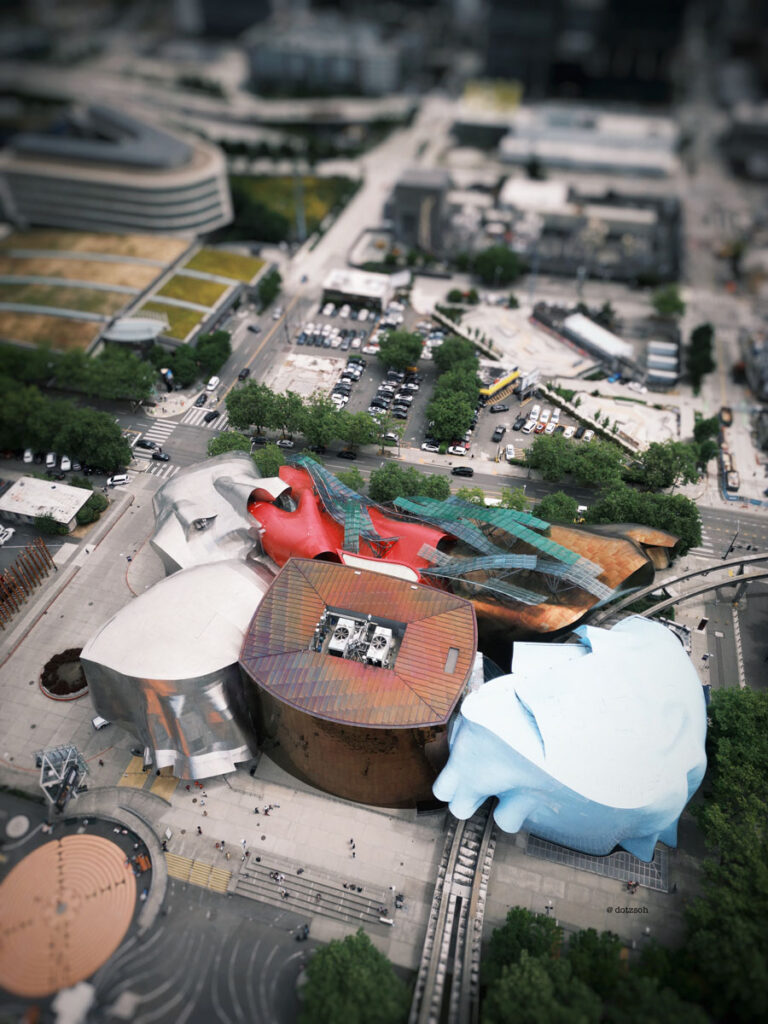
Gehry, the architect who taught buildings to dance and shimmer, designed MO as a physical manifestation of musical energy. Its swirling, stainless-steel panels catch the Seattle light—not just the famous silver drizzle, but the surprising gold of sunset and the sharp blue of a clear day—transforming the exterior into a kinetic art piece. It looks like a burst of sound, a collapsed amplifier exploding with liquid metal, or a galaxy of guitar picks frozen in a whirlwind.
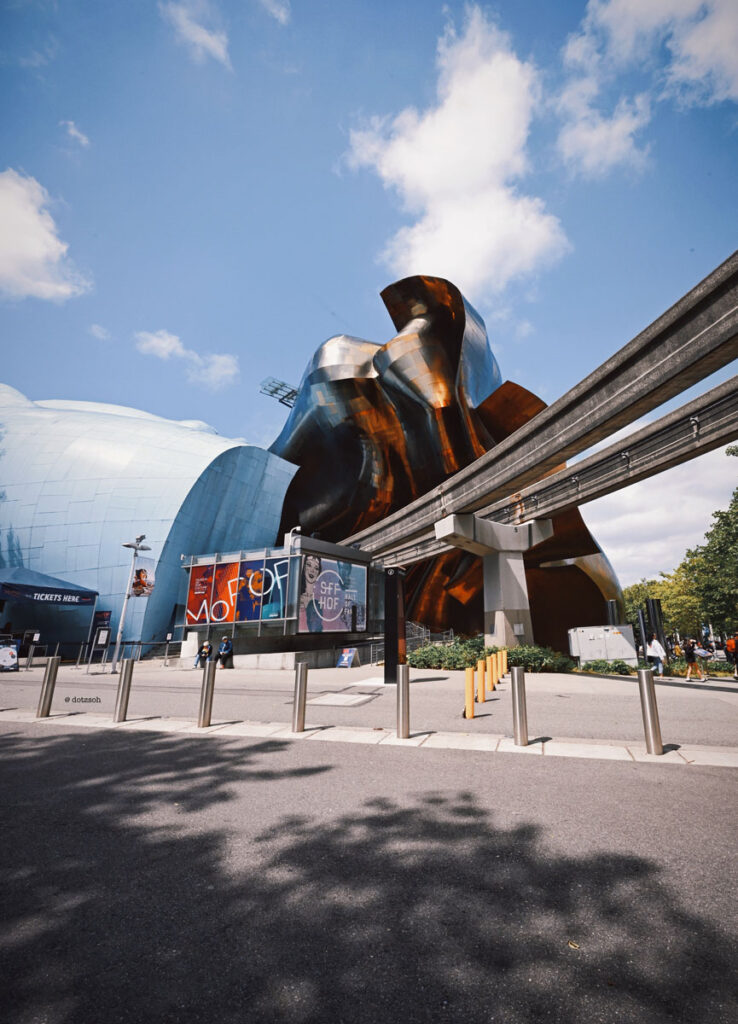
The Needle, all vertical aspiration and geometric precision. The MO, all chaotic, horizontal flow and organic passion. They don’t compete; they converse. One speaks of the future as imagined in the mid-century; the other speaks of the creative, rebellious, and ever-evolving. It’s Seattle in a single glance: the historic ambition and the cutting-edge, grunge-infused heart.
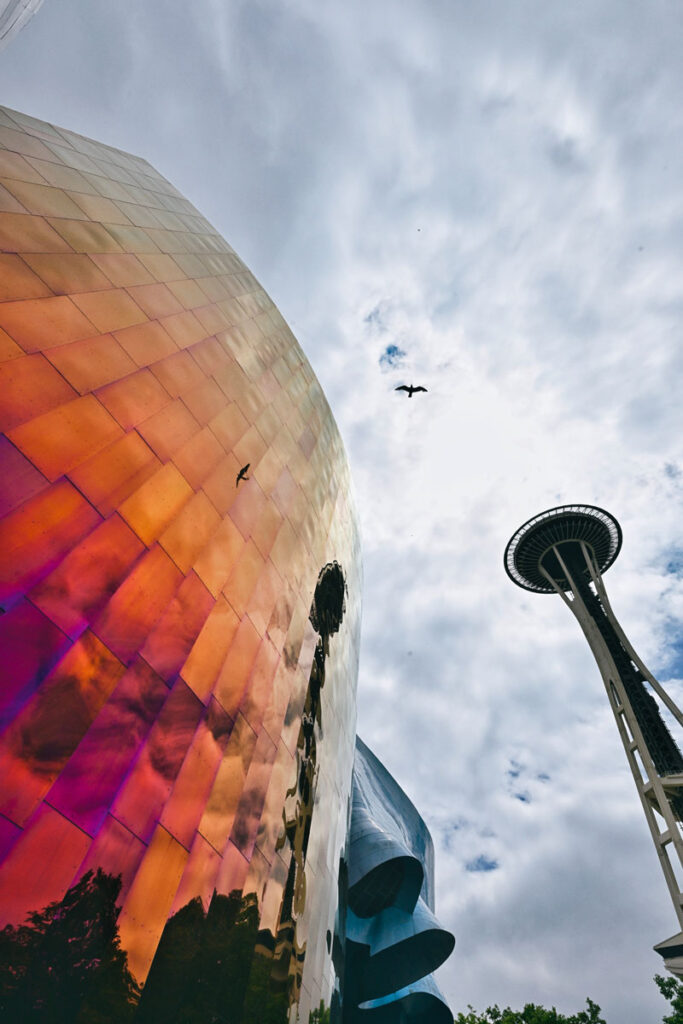
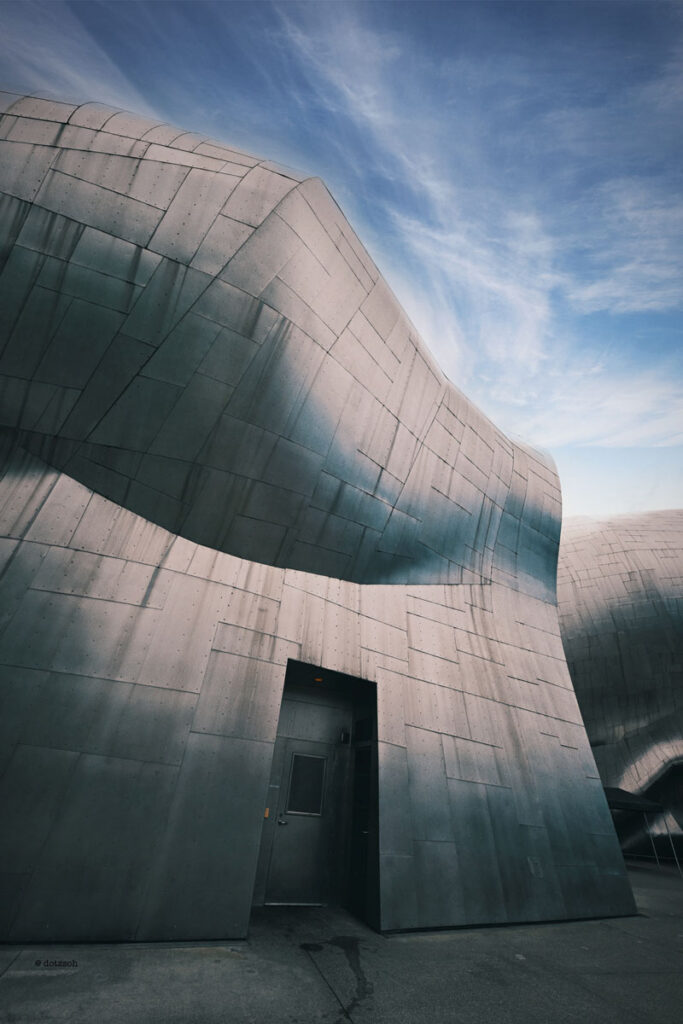
Visiting the Space Needle is a must-do. It grants you the geography of the city—the water, the mountains, the grid of streets. It’s the context.
But visiting the MO Museum is a must-visit. It grants you the city’s psychology, its pulse.
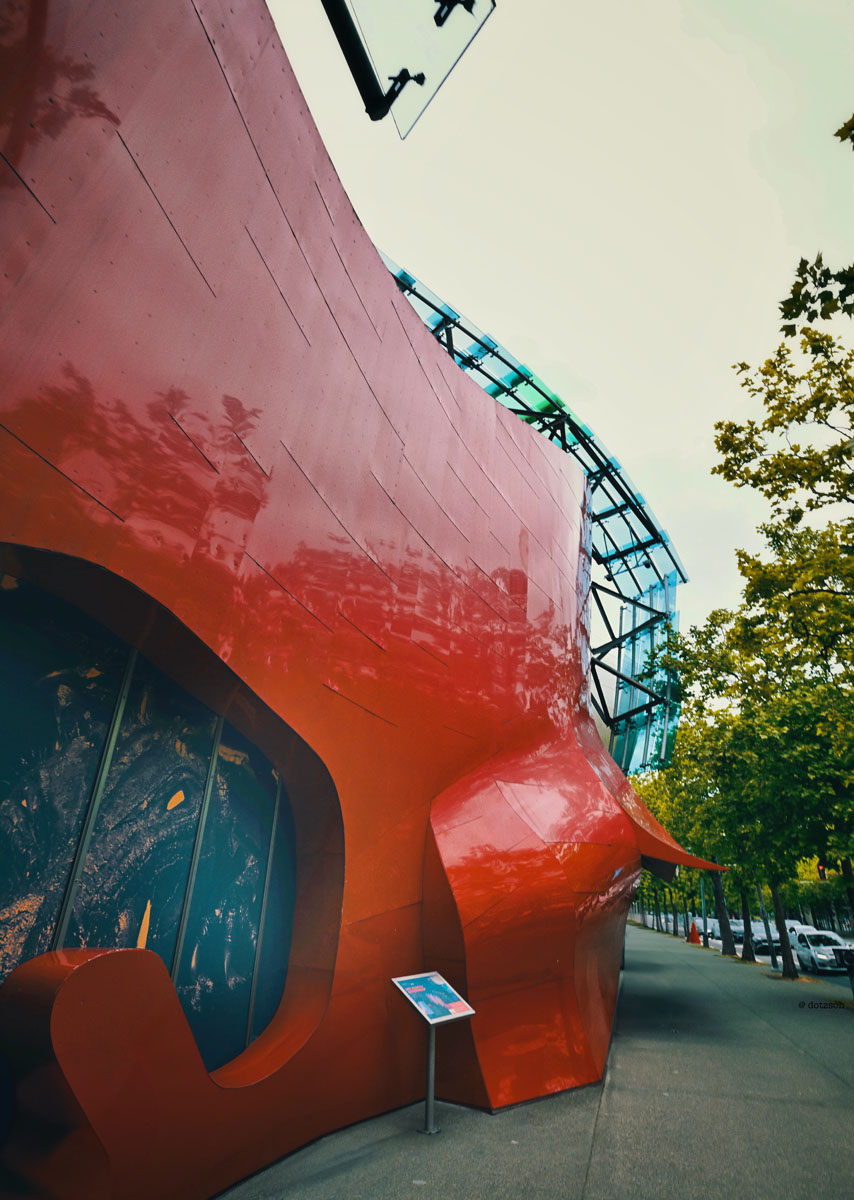
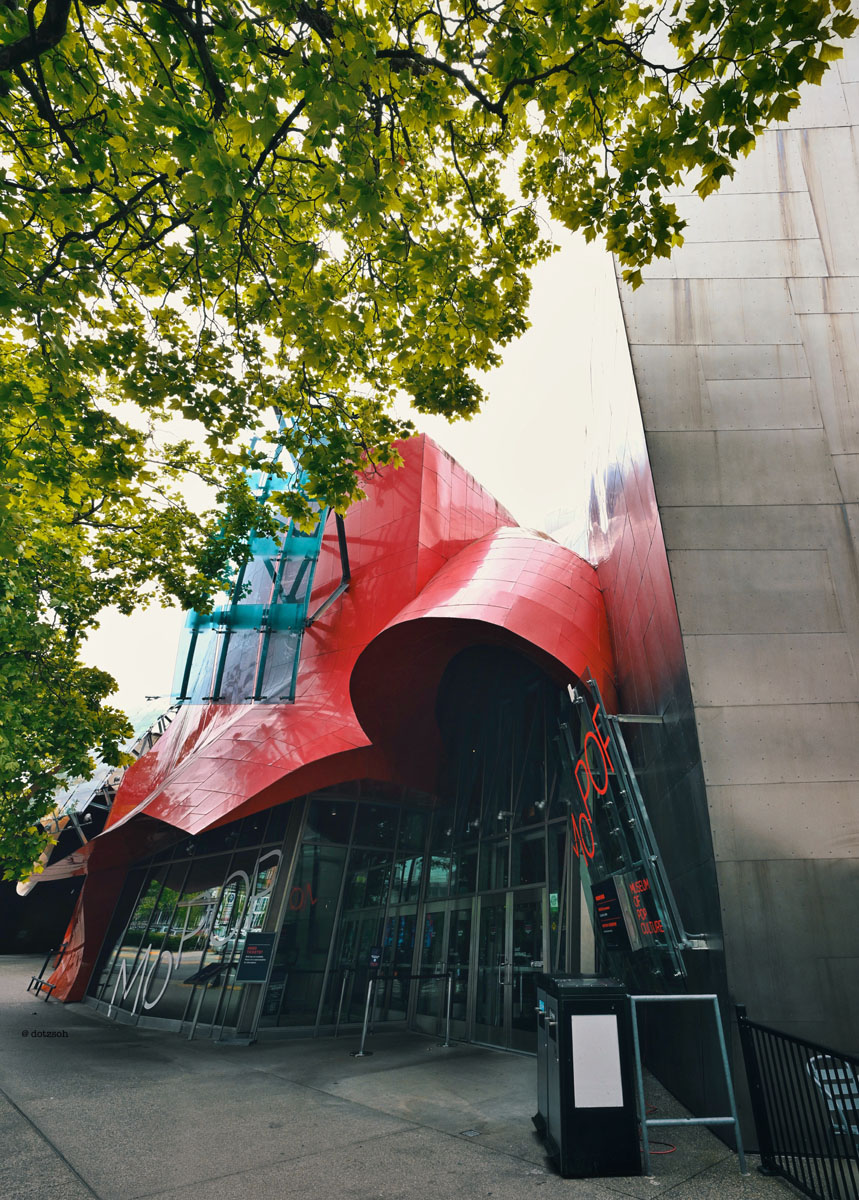
Architecture from the Inside Out: Gehry’s genius isn’t just a facade. Step inside the lobby, and the drama soars. Skylights wash the central atrium in natural light, while the undulating interior walls make you feel as if you’re inside the belly of a beautiful, resonant instrument. The architecture itself prepares you for the auditory journey ahead.
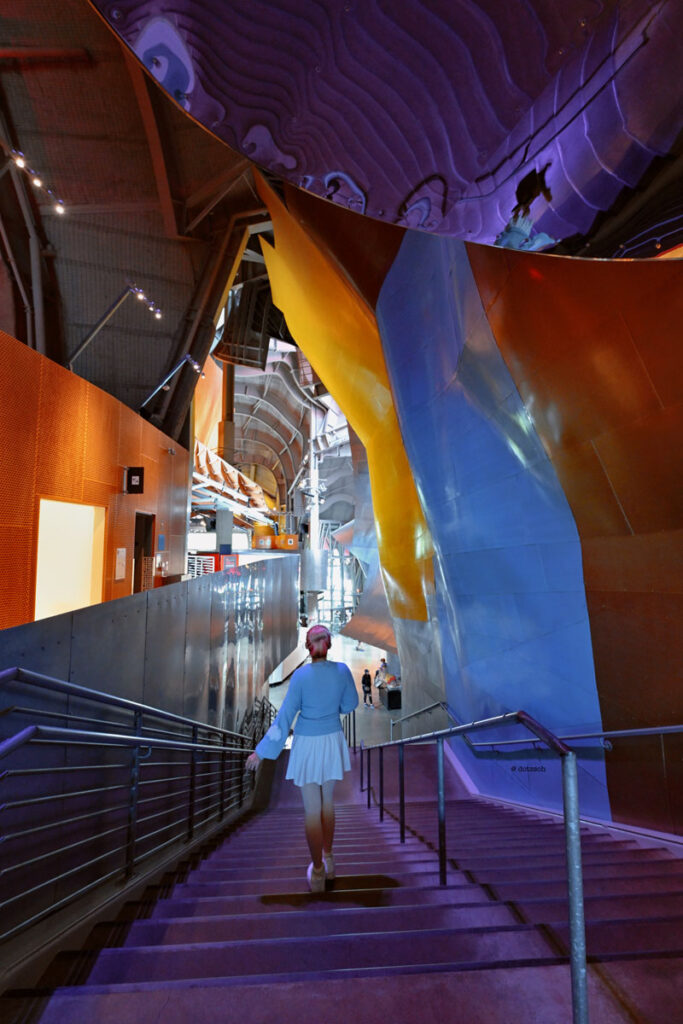
A trip up the Needle followed by an immersion in the MO is the ultimate Seattle one-two punch. From the Needle’s observation deck, you can spot the MO’s shimmering roof—a unique landmark from above. Hours later, inside the MO, you can look up and see the Needle through a Gehry-designed frame, a constant reminder of the city’s layered identity.
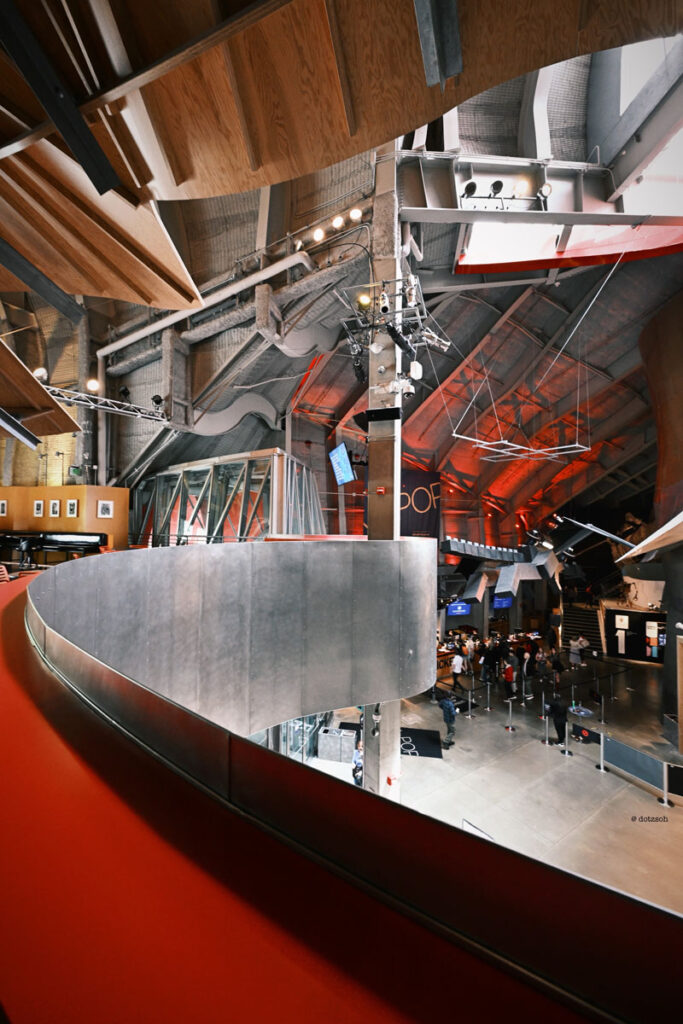
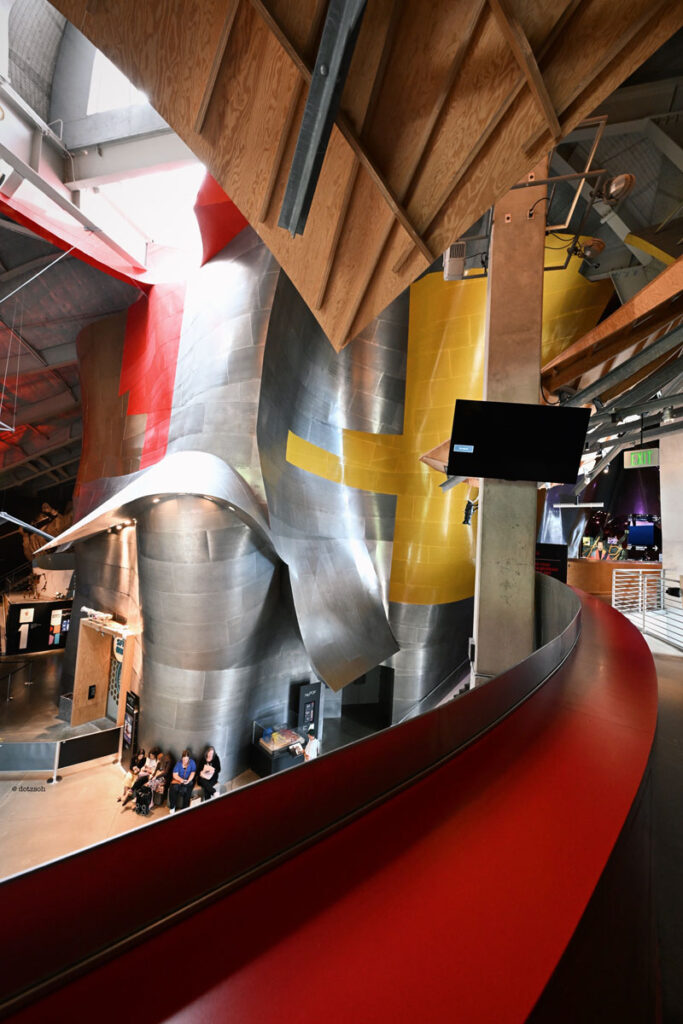
It’s the difference between observing a city and understanding its rhythm. You’ll leave the MO not just with photos of a cool building, but with the echo of a riff in your head, the memory of a handwritten lyric, and the palpable sense that creativity here isn’t confined to a frame or a stage—it’s in the very walls, it’s in the air, and it’s dancing in brilliant, twisted metal right next to the city’s most famous landmark.
So go. Take the elevator to the sky and get the postcard shot. Then, walk a few hundred feet, and let Frank Gehry’s metallic symphony pull you into the deep, resonant, and wonderfully weird heart of Seattle. The view is incredible, but the vibe is unforgettable.